 [en]
[en]
Edgar Cayce used to say that it is possible to connect with any source of knowledge when our consciousness is expanded to the extent that it can render the Akashic records transparent. In the Eastern mystic tradition as well the access to universal knowledge is a stage which can manifest in the awareness of a person during the evolution of his spiritual path.
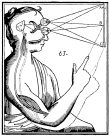
In the West, the subject who knows has been separated from the object of knowledge, especially since the introduction of Descartes’ method where the scientist had to separate his subjectivity from the object of research. Modern science, being based on the reproducibility and objectivity principles which are fundamental to Newton’s world of physics, led to an enormous technical and scientific development but doesn’t have the tools to understand awareness, the soul, the psyche itself, or existence. The problem of consciousness which is nagging the neurosciences seems to be elusive to the research method which negates any role for the inner life.
Subjectivity in science has such a marginal role that it became a taboo, so much so that Alan Wallace even wrote The Taboo of Subjectivity (Oxford University Press, 2000). He affirms that through scientific materialism people became convinced that scientists have knowledge about the mind when actually they are ignorant about it, and that non-scientists do not know what they actually know perfectly. Since for science subjective opinions are fallible by definition, it seems that everything that is intuition or perspicacity does not have value if not backed by data and objective procedures.
Comte, the father of positivism, affirming that what could not be observed and measured was to be considered unreal, put the basis for the digitalization of the human being, where intelligence became a number of IQ and human qualities became DNA sequences. Science expanded itself to the point of including areas pertaining to wisdom.
[/en][it]
Edgar Cayce diceva che è possibile connettersi con qualsiasi fonte di conoscenza quando la nostra consapevolezza si fosse espansa in modo tale da rendere trasparente gli archivi Akasici. Anche nella tradizione mistica orientale l’accesso alla conoscenza universale viene considerata una fase che può manifestarsi nella coscienza di una persona durante il suo percorso di evoluzione spirituale.
In Occidente si è separato il soggetto che conosce dall’oggetto di conoscenza, in particolare dal metodo Cartesiano dove lo scienziato separa la sua soggettività dall’oggetto di ricerca. La scienza moderna, basandosi sui principi della riproducibilità e dell’oggettività, funzionali per il mondo della fisica di Newton, ha portato a uno sviluppo tecnico e scientifico enorme ma non ha gli strumenti per comprendere la consapevolezza, l’anima, la psiche stessa, l’esistenza. Il problema della coscienza, che assilla le neuroscienze, sembra essere elusivo al metodo di ricerca che nega all’interiorità alcun ruolo.
La soggettività nella scienza ha un ruolo talmente marginale che è diventato un tabù, tanto che Alan Wallace ha scritto The Taboo of Subjectivity (Oxford University Press. 2000). Egli afferma che tramite il materialismo scientifico le persone si sono convinte che gli scienziati abbiano delle conoscenza sulla mente su cui di fatto sono ignoranti e che i non-scienziati non conoscono ciò che in realtà sanno perfettamente. Poiché i giudizi soggettivi sono per la scienza per definizione fallibili, sembra che tutto ciò che è intuizione o perspicacia non abbia valore se non è suffragato da dati e procedure oggettive.
Comte, il padre del positivismo, affermando che ciò che non poteva essere osservato e misurato andava considerato irreale, poneva le basi per la digitalizzazione dell’essere umano, dove l’intelligenza è diventata un numero di QI e le qualità umane sono diventate sequenze di DNA. La scienza si è espansa fino a includere aree che erano pertinenti alla saggezza.
[/it]
Leggi tutto “Mystifying science, and scientific mysticism”