 [en]
[en]
Wired author Ryan Singel wrote an article about the Huffington Post “being accused of slimy business practices by a handful of smaller publications who say the site is unfairly copying and publishing their content.” Singel quotes Moser, an editor at alternative weekly Chicago Reader, saying:
If the future of journalism – which everyone keeps telling me The Huffington Post represents – is a bunch of search-engine optimization scams, we have bigger problems than Sam Zell’s bad investment strategies.
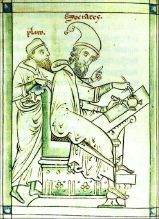
Let me quote Plato in Phaedrus:
Socrates: At the Egyptian city of Naucratis, there was a famous old god, whose name was Theuth; the bird which is called the Ibis is sacred to him, and he was the inventor of many arts, such as arithmetic and calculation and geometry and astronomy and draughts and dice, but his great discovery was the use of letters. Now in those days the god Thamus was the king of the whole country of Egypt; and he dwelt in that great city of Upper Egypt which the Hellenes call Egyptian Thebes, and the god himself is called by them Ammon. To him came Theuth and showed his inventions, desiring that the other Egyptians might be allowed to have the benefit of them; he enumerated them, and Thamus enquired about their several uses, and praised some of them and censured others, as he approved or disapproved of them. It would take a long time to repeat all that Thamus said to Theuth in praise or blame of the various arts. But when they came to letters, This, said Theuth, will make the Egyptians wiser and give them better memories; it is a specific both for the memory and for the wit. Thamus replied: O most ingenious Theuth, the parent or inventor of an art is not always the best judge of the utility or inutility of his own inventions to the users of them. And in this instance, you who are the father of letters, from a paternal love of your own children have been led to attribute to them a quality which they cannot have; for this discovery of yours will create forgetfulness in the learners’ souls, because they will not use their memories; they will trust to the external written characters and not remember of themselves. The specific which you have discovered is an aid not to memory, but to reminiscence, and you give your disciples not truth, but only the semblance of truth; they will be hearers of many things and will have learned nothing; they will appear to be omniscient and will generally know nothing; they will be tiresome company, having the show of wisdom without the reality.
Nobody challenges the importance of letters in our world any more, not even philosophers who use them for elaborating their thoughts. Socrates was not an ordinary philosopher, but a wise and enlightened man who reached spiritual heights beyond conceptual thoughts.
[/en][it]
L’autore della rivista Wired Ryan Singel ha scritto un articolo a proposito dello Huffington Post, un famoso blog di informazione “accusato di scorrette pratiche commerciali da alcune pubblicazioni minori che affermano che il sito copia e pubblica ingiustamente i loro contenuti”. Singel cita Moser, un editor del settimanale Chicago Reader che afferma:
Se il futuro del giornalismo, che tutti quanti dicono che lo Huffington Post rappresenta, è un insieme di trucchi e truffe per ottimizzare gli accessi per i motori di ricerca, abbiamo dei problemi enormi.
Vorrei citare Platone nel Fedro:
Socrate: Ho sentito dunque raccontare che presso Naucrati, in Egitto, c’era uno degli antichi dèi del luogo, al quale era sacro l’uccello che chiamano ibis; il nome della divinità era Theuth. Questi inventò dapprima i numeri, il calcolo, la geometria e l’astronomia, poi il gioco della scacchiera e dei dadi, infine anche la scrittura. Re di tutto l’Egitto era allora Thamus e abitava nella grande città della regione superiore che i Greci chiamano Tebe Egizia, mentre chiamano il suo dio Ammone. Theuth, recatosi dal re, gli mostrò le sue arti e disse che dovevano essere trasmesse agli altri Egizi; Thamus gli chiese quale fosse l’utilità di ciascuna di esse, e mentre Theuth le passava in rassegna, a seconda che gli sembrasse parlare bene oppure no, ora disapprovava, ora lodava. Molti, a quanto si racconta, furono i pareri che Thamus espresse nell’uno e nell’altro senso a Theuth su ciascuna arte, e sarebbe troppo lungo ripercorrerli; quando poi fu alla scrittura, Theuth disse: «Questa conoscenza, o re, renderà gli Egizi più sapienti e più capaci di ricordare, poiché con essa è stato trovato il farmaco della memoria e della sapienza».
Allora il re rispose: «Ingegnosissimo Theuth, c’è chi sa partorire le arti e chi sa giudicare quale danno o quale vantaggio sono destinate ad arrecare a chi intende servirsene. Ora tu, padre della scrittura, per benevolenza hai detto il contrario di quello che essa vale. Questa scoperta infatti, per la mancanza di esercizio della memoria, produrrà nell’anima di coloro che la impareranno la dimenticanza, perché fidandosi della scrittura ricorderanno dal di fuori mediante caratteri estranei, non dal di dentro e da se stessi; perciò tu hai scoperto il farmaco non della memoria, ma del richiamare alla memoria. Della sapienza tu procuri ai tuoi discepoli l’apparenza, non la verità: ascoltando per tuo tramite molte cose senza insegnamento, crederanno di conoscere molte cose, mentre per lo più le ignorano, e la loro compagnia sarà molesta, poiché sono divenuti portatori di opinione anziché sapienti».
Nessuno mette più in discussione l’importanza della scrittura nel nostro mondo, neanche i filosofi che la usano per l’elaborazione dei loro pensieri. Socrate non era un filosofo qualunque, ma un uomo saggio e illuminato che aveva raggiunto delle vette spirituali al di là del pensiero concettuale.
[/it] Leggi tutto “Are bloggers a new elite?”