Feed on
Posts

Category Archive for 'Technosoul'

Bioenergetic bytes

[en]

Ronald David Laing was a controversial psychiatrist, often associated with the anti-psychiatrist movement. He combined existential philosophy with psychiatry, giving new perspectives on the nature of mental illness.

In his most-known book, The Divided Self, he describes the schizoid person in these terms.

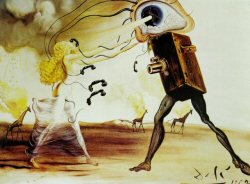
The schizoid individual exists under the black sun, the evil eye, of his own scrutiny…The “self-conscious” person is caught in a dilemma. He may need to be seen and recognized, in order to maintain his sense of realness and identity. Yet, at the same time, the other represents a threat to his identity and reality…He is, therefore, driven compulsively to seek company, but never allows himself to “be himself” in the presence of anyone else…The self is related primarily to objects of his own fantasies. Being much a self-in-fantasy, it becomes eventually volatilized. In its dread of facing the commitment to the objective element, it sought to preserve its identity; but, no longer anchored to fact, to the conditioned and definitive, it comes to be in danger of losing what it was seeking above all to safeguard. Losing the conditioned, it loses its identity; losing reality, it loses its possibility of exercising freedom of choice in the world (Ronald David Laing, The Divided Self, London: Tavistock Publications, 1959).

Laing thought as well that our inner lives and feelings come mainly from our sense of connection with others and from the knowledge that others have about us. Without this, we suffer from an existential insecurity.

In Laing’s words, I can recognize the attitude of another kind of schizoid: the heavy Internet user, who needs to be connected and seen, through social networks and messaging systems, but up to a certain point, at a safe distance. His profile itself and the people he is connected to are mostly objects of his projections. He will introduce himself in order to be seen by others in a likable and acceptable way.

[/en][it]

Ronald David Laing era uno psichiatra controverso. Spesso è stato associata al movimento dell’antipsichiatria e combinava la filosofia esistenziale con la psichiatria, dando nuove prospettive alla natura della malattia mentale.

Nel suo libro più conosciuto, L’io diviso, descrive la persona schizoide in questi termini:

Lo schizoide vive continuamente sotto un sole nero: l’occhio malevole e scrutatore di se stesso. [...] La persona “cosciente” di sé si trova in un dilemma. Ha bisogno di essere vista e riconosciuta, per poter conservare il senso della sua identità e della sua realtà; e al tempo stesso gli altri rappresentano un pericolo, proprio per tale realtà e identità. [...] Perciò è costretto a cercare compagnia, ma non si lascia mai andare ad essere se stesso in presenza di altri. [...] Le relazioni primarie di un io come questo riguardano gli oggetti delle sue stesse fantasie: questa è la ragione per cui alla fine esso si volatizza. Nel suo timore di affrontare con impegno l’elemento oggettivo esso lotta disperatamente per conservare la sua identità, ma non essendo più ancorato ai fatti, alla realtà contingente e definita, corre il rischio di perdere proprio ciò che soprattutto cercava di salvaguardare. Perdendo la dimensione contingente della realtà perde l’identità, e perdendo la realtà perde la possibilità di esercitare un’effettiva libertà di scelta nel mondo. (Ronald David Laing. L’io diviso. Einaudi. Torino. 1969.)

Inoltre Laing riteneva che la nostra vita interiore e le nostre emozioni derivano in grande misura dal senso di connessione che abbiamo con gli altri e dalla conoscenza che gli altri hanno di noi stessi. Senza di queste soffriamo di un’insicurezza esistenziale.

Nelle parole di Laing posso riconoscere l’attitudine di un altro tipo di schizoide: il forte utilizzatore di Internet, che necessita di essere connesso e visto, tramite i social networks ed i sistemi di messaggistica, ma connesso fino ad un certo punto, ad una distanza di sicurezza. I profili che tale utente compila nei siti e le persone con cui si connette sono più che altro produzione delle sue proiezioni. Egli si presenterà in modo tale da essere visto agli occhi altrui nel modo in cui ritiene di essere accettato e allettante.

[/it]

(more…)

Read Full Post »

I click, therefore I am: Toward outsourcing our identity

[en]
We are scattered over the Net, a piece in a social networking site, another piece in a different site, in a dating site, we write in our blog and we comment on others’ blogs, meet on chats and join forums on the most diverse subjects. Furthermore, we keep several contacts by email.

Our identities are becoming ever more fluid, we feel affiliated with various situations with only a part of ourselves. The real communities of family and friends too are now more like windows which maybe we would prefer to also manage in our computers. Lifelogging projects want to extend the scope of our life activities which are processed and managed online.

Sherry Turkle described in her books The Second Self: Computers and the Human Spirit (1984) and Life on the Screen: Identity in the Age of the Internet the exploration of the psychological parts in role-playing games and later on the Net. She thought that having the chance to live our object relationships could be important to individualize our identities.

One aspect of our online identities, explored by several experts, is the attenuation of inhibitions in online life. The superego, our psyche’s structure devoted to criticizing ourselves, to inhibit our actions and desires, is weakened by our online activity. Without superego pressure we can explore parts which are usually kept in the shadow.

Using false identities, as happened more frequently in the first years on the Internet, hides our real identities (partly for our own selves as well) and the superego is hidden along with it.

[/en][it]

Siamo sparpagliati nella rete, un pezzo su un sito di social networking, un pezzo su un altro, un altro pezzo su un sito di incontri, poi scriviamo sul nostro blog e commentiamo sui blog degli altri, ci troviamo sulle chat, e poi partecipiamo ai forum sui temi più disparati; inoltre manteniamo diversi contatti via email.

La nostra identità è sempre più fluida, ci sentiamo di appartenere alle diverse situazioni solo con una parte di noi stessi. Le comunità reali della famiglia e degli amici sono altre finestre che magari vorremmo poterle gestire a loro volta con computer. I progetti di lifelogging vogliono estendere le attività della nostra vita che vengono elaborate e gestite online.

Sherry Turkle aveva già descritto nel suo libro Il Secondo Io del 1984, e poi con La vita sullo schermo l’esplorazione delle parti psicologiche nei giochi di ruolo e poi nella Rete. La Turkle riteneva che il poter vivere i propri oggetti di relazione potesse essere importante per individuare la propria identità.

Un aspetto della nostra identità online, anche questo esplorato da diversi studiosi, è l’attenuazione delle inibizioni nella nostra vita online. Il superego, la struttura della nostra psiche dedicata a criticare noi stessi, ad inibire le nostre azioni e desideri, viene indebolito dalla nostra attività online. Senza la pressione del superego possiamo esplorare parti di noi stessi che normalmente sono in ombra.

Usare una falsa identità, come succedeva più frequentemente nei primi tempi della Rete, ci nasconde la nostra vera identità (in parte anche a noi stessi) e con questa anche il superego inibente.
[/it]

(more…)

Read Full Post »

Nobody’s copyright

[en

]The debate about copyright is one of the most heated on the Internet. Record labels, movie distributors, publishers, news agencies, bloggers and users are involved in a discussion which at times gets aggressive.

It seems that virtually everything on the Net is eventually copied, aggregated, cut, pasted and homogenized. There are various sites which aggregate articles by collecting everything being produced by blogs. The aggregators often allow readers to comment on the articles. This way, both the contents and the comments are being taken away from the authors’ sites.

Every intellectual production is being absorbed by the collective sphere and somehow becomes depersonalized from the original author.

The hyperproduction of information and knowledge by hundreds of millions of people at the same time creates a whirl where individual identities and sources of information become out of focus and, like the rotation pinwheel of colors, creates a single white color from which it is difficult to trace the original color.

[/en][it]

Il dibattito sul copyright è uno dei più accesi su Internet. Case discografiche, cinematografiche, editori, agenzie di informazioni, blogger e utenti sono coinvolti in una discussione che talvolta assume dei toni aggressivi.

Sembra che tutto ciò che è mostrato in Rete alla fine è citato, copiato, aggregato, tagliato, incollato e omogeneizzato. Vi sono diversi siti che aggregano gli articoli raccogliendo tutto quanto viene prodotto dai vari blog. Gli stessi aggregatori spesso consentono anche di commentare gli articoli da parte dei lettori. In questo modo, sia i contenuti che le discussioni vengono portate fuori dal sito degli autori.

Ogni produzione intellettuale viene assorbita dalla sfera collettiva e in qualche modo si spersonalizza nei confronti all’autore originale.

L’iperproduzione di informazioni e conoscenze da parte di centinaia di milioni di persone contemporaneamente crea una girandola dove  le identità e le sorgenti individuali delle informazioni si sfuoca e, come la rotazione di tutti i colori, genera un unico colore bianco da dove è difficile risalire al colore originale.

[/it]

(more…)

Read Full Post »

The yogic geek

[en]

The methods of tracing and controlling our Internet activities have become constantly more varied and sophisticated. Cookies are probably the oldest method (since 1994) to trace – mainly for advertising purposes – the websites that are visited.

Governments, not only in dictatorships but also in Western countries control every piece of information that passes through the Net. One of the famous projects is Echelon, which gives access to every information sent on email, instant messaging and telephone. Beyond this, the police as well can have access to the data regarding Internet use in order to monitor users.

But on the whole we are accomplices to the information that we send. Google History keeps track of all the search we do on the Net. Google Desktop and similar services index everything that happens in our computer.

RSS readers like Google Reader know our interests by managing our subscriptions to blogs. Tracing cancellations and new subscriptions, it is possible for them to map the way our thoughts evolve.

As if this were not enough, we expose ourselves directly in social networking sites, forums, and blogs with our written words and our photos. Sometimes, we need this for getting an identity on the Net in exchange for some attention from others.

[/en][it]

Le tecniche di tracciamento e controllo della nostra attività su Internet sono sempre più variate e sofisticate. I cookies sono forse il modo più vecchio, fin dal 1994, per tracciare i siti che vengono visualizzati, perlopiù per scopi pubblicitari.

I governi, non solo dei paesi dove vige la dittatura, ma di tutto l’occidente controllano ogni flusso di informazioni che transita sulla rete. Famoso è il progetto Echelon, tra gli altri, che dà accesso ad ogni informazione mandata via email, telefono e instant messaging. Ad aggiungersi a questi, gli organi di polizia possono accedere ai dati di utilizzo della rete per monitorare gli utenti.

Ma perlopiù siamo complici delle informazioni che trasmettiamo. Google History tiene traccia di tutte le ricerche che eseguiamo in rete. Google Desktop e servizi simili indicizzano tutto quanto avviene sul nostro computer.

I lettori RSS tipo Google Reader conoscono i nostri interessi gestendo le nostre iscrizioni ai blog. Con le cancellazioni e le nuove iscrizioni possono tenere traccia di come si evolve il nostro pensiero.

Se non bastasse, ci esponiamo direttamente nei siti di social networking, nei forum, nei nostri blog con le parole scritte e con le nostre foto. A volte ci serve per darci un’identità in rete in cambio di un po’ di attenzione da parte di altri.

[/it]

(more…)

Read Full Post »

No identity

donna-senza-viso[en]

Neuroscientist Susan Greenfield questions what technology is doing to human identity in Perspectives: Reinventing human identity (New Scientist of May 21, 2008.)

According to one estimate, Western children spend some six hours a day at a computer screen. Given the plasticity of the human brain, shouldn’t we ask how living effectively in two dimensions might leave its mark on neuronal connectivity?

Then she muses about whether it is a fact that interacting continuously with a fast-paced multimedia environment would predispose our brain to attention deficit disorder and, that

the visual world of the screen might affect our ability to develop the imagination and form the kind of abstract concepts that have until now come from first hearing stories, then reading on ones own. Will future generations prefer the here-and-now, opting for a strong sensory experience over a more personalized cognitive narrative? … Could we even end up living in a world where there is no personal narrative at all, no meaning, no context, just the experience of the thrill of the moment? Humans have always been hedonistic. Much of what we enjoy, from sex and drugs to fine food and wine, involves an abrogation of a sense of self. We “blow” our minds, “let ourselves go”: we are back in the booming, buzzing confusion of the moment, our identity suspended.

She calls this state the “Nobody” scenario, predisposed by twenty-first–century technology, different from the “Someone” identity of Western societies or the “Anyone” persona of collectivity cultures like communism. She also envisions a fourth “Eureka” scenario where creativity gives fulfillment and builds an individual identity.

[/en][it]

La neuroscienziata Susan Greenfield, su New Scientist del 21 Maggio 2008 si chiede qual è l’impatto della tecnologia sull’identità umana:

In accordo ad una stima, i bambini occidentali passano qualcosa come 6 ore al giorno di fronte ad uno schermo del computer. Data la plasticità del cervello umano, non dovremmo chiederci come il vivere di fatto in due dimensioni possa lasciare il segni sulle connessioni neuronali?

Quindi riflette sul fatto che una interazione continua con un ambiente multimediale veloce potrebbe predisporre il cervello al deficit di attenzione e che

il mondo visuale dello schermo potrebbe influire sulla nostra capacità di sviluppare l’immaginazione e formare il tipo di concetti astratti che fin’ora sono arrivati dall’ascolto delle storie e dalla lettura. Le future generazioni preferiranno il “qui e ora”, scegliendo un’esperienza sensoriale forte al posto di una narrativa cognitiva più personalizzata? [...] Potrebbe anche essere che finiamo a vivere in un mondo dove non vi è alcuna narrativa personale, nessun significato, nessun contesto, solo l’esperienza del brivido del momento? Gli esseri umani sono sempre stati edonisti. La maggior parte di ciò di cui gioiamo, dal sesso alle droghe al buon cibo e al vino, comporta un’abrogazione del senso di sé. Ci troviamo nella rimbombante ebbrezza del momento, con la nostra identità sospesa.

Susan Greenfield chiama questo stato lo scenario “Nessuno”, indotto dalla tecnologia del ventunesimo secolo, diverso dall’identità “Qualcuno” delle società occidentali o della persona “Chiunque” delle culture collettivistiche quali il comunismo. Anche, lei concepisce un quarto scenario “Eureka” dove la creatività dà appagamento e crea un’identità individuale.

[/it] (more…)

Read Full Post »

Writer’s block

thinking-man[en]

This is an expanded version of an older post.

Many writers and probably many bloggers are faced with the typical writer’s block. While this block doesn’t affect many writers who operate in a productivity setting, it does afflict those who need the spark of creativity to express something bright and new.

True creative expression goes through cycles; the similarity between creativity and procreativity is not just linguistic. Both follow cycles and peaks like the female reproductive cycle.

Parecchi scrittori e probabilmente diversi blogger affrontano il tipico blocco dello scrittore. Mentre questo blocco colpisce pochi scrittori che operano in un ambiente produttivo, tipicamente coinvolge invece coloro che necessitano di un lampo creativo per esprimere qualcosa di fresco e innovativo.

L’autentica espressione creativa passa attraverso dei cicli; le somiglianze tra la creatività e la procreatività non sono solo linguistiche. Entrambe seguono cicli e vette come il ciclo riproduttivo femminile.

In the astrological tradition, both the creative and sexual expressions are at home in the fifth house, telling us that symbolically the creative forces in the universe derive from the same archetype. People who have high libidos often have some kind of artistic or creative quality as well.

The Latin word oestrus was used to mean “frenzy, driven by desire, mad impulse.” There’s a compulsive quality in this, a drive to act, just as compulsive as sex can be, being the most (pro)creative energy in the world.

[/en][it]

Questa è una versione espansa di un post che avevo pubblicato in precedenza.

Parecchi scrittori e probabilmente diversi blogger affrontano il tipico blocco dello scrittore. Mentre questo blocco colpisce pochi scrittori che operano in un ambiente produttivo, tipicamente coinvolge invece coloro che necessitano di un lampo creativo per esprimere qualcosa di fresco e innovativo.

L’autentica espressione creativa passa attraverso dei cicli; le somiglianze tra la creatività e la procreatività non sono solo linguistiche. Entrambe seguono cicli e vette come il ciclo riproduttivo femminile.

Nella tradizione astrologica, entrambe le espressioni creative e sessuali si trovano nella quinta casa. La simbologia ci suggerisce che le forze creative dell’universo derivano dallo stesso archetipo. Le persone con una forte libido spesso possiedono anche delle capacità creative o artistiche.

In the astrological tradition, both the creative and sexual expressions are at home in the fifth house, telling us that symbolically the creative forces in the universe derive from the same archetype. People who have high libidos often have some kind of artistic or creative quality as well.

The latin word oestrus was used to mean frenzy, driven by desire, mad impulse. There’s a compulsive quality in this, a drive to act, just as compulsive as sex can be, being the most (pro)creative energy in the world.

The process of creative revelation and the eureka effect has been documented by neurophysiological researches. Joseph Chilton Pearce in The Biology of Transcendence (Inner Traditions International. Rochester. 2002), referring to Margharita Laski’s work on Ecstasy, illustrates the six stages of the discovery process: 1. Asking the question. 2. Looking for the answer. 3. Hitting the plateau period. 4. Giving up the search for a solution. 5. The answer comes as the eureka effect. 6. Translating the discovery in a way that can be understood and shared by others.

This six stage process involves different parts of the brain. Both brain hemispheres are involved, as well as the emotional-limbic brain, which is itself the connection to the heart. Without the passion of the heart, the creative discovery seems difficult to reach. It reminds me of a book by Almaas saying that “Love of truth for its own sake is actually the expression of essential heart.”

What is usually not accepted in our hyper-productive culture that fears silence and the void is that fourth stage of giving up the search for a solution. Even though everybody has the experience of finding a solution or an insight when the mind wasn’t actively searching for it, the general attitude is to push for a solution, not accepting that empty stage. Quoting Joseph Chilton Pearce, “The corpus callosum can complete the circuitry only when the left hemisphere is inactive, when the analytical and critical processes of mind are suspended.” Without knowing anything about neurophysiology, most of the spiritual teachers say that there is a stage of giving up the search and that the condition of not-knowing is necessary for any true insight on ourselves. So the eureka effect path seems to apply both to personal insights and to scientific or artistic works. Given this vision, the writer’s block is not just natural, is even needed for every important creative outcome.

La parola latina oestrus veniva usata per significare frenesia, essere guidati dal desiderio, impulso folle. C’è una qualità compulsiva in ciò, una spinta all’azione, quanto può essere compulsiva la sessualità, come l’energia più fortemente (pro)creativa.

[/it]

(more…)

Read Full Post »

Descartes’ little “Spirits”

descartes_mind_and_body[en]

Though Descartes is considered the father of rationality and of the modern scientific method, in his researches he was a philosopher and sometimes a mystic. The religious aspect was a kind of partial compromise for pandering to the ecclesiastic hierarchies of his time, but his method of investigation was still anchored to inner analysis and to philosophy, besides scientific objectivity.

Science, not having modern research instruments then, was integrated with the investigation methodologies that rested upon cosmology, religion, and philosophy, among other sources of knowledge.

It is known that Descartes considered the pineal gland as a bridge between the immortal soul and the mortal body.

[/en][it]

Cartesio, nonostante sia considerato il padre della razionalità e del metodo per l’indagine scientifica moderna, era nelle sue ricerche filosofo e talvolta mistico. In parte l’aspetto religioso era un compromesso per assecondare le gerarchie ecclesiastiche del tempo, ma il suo metodo di indagine era comunque ancora ancorato all’indagine interiore e alla filosofia oltre che all’oggettività della scienza.

La scienza, non avendo gli strumenti di indagine moderni, era integrata con metodologie di indagine che poggiavano sulla cosmologia, sulla religione e sulla filosofia, tra le altre fonti di conoscenza.

E’ risaputo che Cartesio ritenesse la ghiandola pineale un ponte tra l’anima immortale e il corpo mortale.

[/it]

(more…)

Read Full Post »

Technological salsa

che guevara computer[en]

Joseph Weizenbaum, who died recently, had documented in the 1970s in Computer Power and Human Reason (W. H. Freeman and Company, 1976) the natures of compulsive programmers, disinterested in their bodily needs and detached from the world around them.

Such figures are come across in a market economy country where advanced technologies are part of everyday life, and we don’t pay much attention to them.

The famous McLuhan phrase, “The medium is the message,” and before this the Taoist affirmations according to which the use of instruments transforms us into them had never seemed as self-evident to me as in Cuba some years ago.

[/en][it]

Joseph Weizenbaum in Il potere del computer e la ragione umana (Edizioni Gruppo Abele. Torino. 1987), da poco scomparso, aveva documentato già dagli anni ’70 la natura dei “programmatori coatti”, che dedicano la vita alla programmazione, disinteressati dei bisogni del corpo e distaccati dal mondo che li circonda.

Finché si incontrano tali figure in un centro di calcolo di una nazione con economia di mercato dove le tecnologie avanzate sono di casa ci si fa poco caso.

La famose frase “Il medium è il messaggio” di McLuhan e prima di questa, le affermazioni del taoismo secondo cui l’utilizzo degli strumenti ci trasforma negli stessi, non mi sono mai sembrate tanto evidenti quanto a Cuba alcuni anni fa.

[/it]

(more…)

Read Full Post »

The mind as a kind of media

[en]

Marshall McLuhan told us that every medium and every technology has a role in the extension and numbness of our organs. The mind’s extensions created by computer technology on the one hand expand our mental possibilities in terms of research, information, and knowledge processing, but on the other bring us to amputate or to numb some of the capacities of the same mind.

The computer can seem an extension of the mind’s capacities, but in reality it numbs our capacities to observe our minds from the inside, as self-consciousness, of our mental mechanisms, and of our whole body/mind systems.

At this point, my hypothesis is: If the computer is a way of outsourcing the mind’s functions, the mind itself could be considered as a “medium” which determines an extension and an anesthesia, in this case in relation to the original completeness of the soul. This is an application of McLuhan’s theories considering the knowledge that comes from the psychology of the ego.

[/en][it]

Sappiamo da Marshall McLuhan che ogni medium ed ogni tecnologia hanno un ruolo nell’estensione e nell’intorpidimento dei nostri organi. Le estensioni della mente create dalla tecnologia del computer se da una parte ci espandono le possibilità mentali in termini di ricerca ed elaborazione di informazioni e conoscenze, dall’altra parte ci portano ad amputare o intorpidire alcune capacità della stessa.

Le estensioni della mente create dalla tecnologia del computer se da una parte ci espandono le possibilità mentali in termini di ricerca ed elaborazione di informazioni e conoscenze, dall’altra parte ci portano ad amputare o intorpidire alcune capacità della stessa. Il computer, che può sembrare un’estensione delle capacità della mente, in realtà intorpidisce le capacità di osservazione della nostra mente dall’interno, intesa come consapevolezza di noi stessi, dei nostri meccanismi mentali e del nostro sistema globale corpo/mente.

A questo punto la mia ipotesi è che se il computer è un modo di esternalizzare le funzioni della mente, la mente stessa può essere considerata come un “medium” che determina una estensione e una anestesia, in questo caso in relazione alla completezza originaria dell’anima. Un’applicazione delle teorie di McLuhan considerando le conoscenze della psicologia dell’ego.

[/it]

(more…)

Read Full Post »

Echoes of a global tribalism

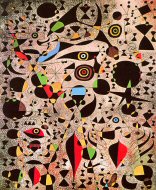
Mirò. Ciphers & Constellations in Love with a Woman[en]

Just before the spread of the Internet, around 1995, we experienced the mobile phone boom in Italy, two media which have transformed our lives. One of the first things I noticed with the advent of the mobile was the transformation of our inner relationship with the territory.

People weren’t “there” anymore where they were physically, but in some other place. Human beings have always inwardly estranged themselves from reality, getting lost in thought, distracted by their mental convolutions, but with mobiles, “not being there” took on a more physical connotation. In the beginning it was amazing to look at people walking alone on the street talking through earphones and gesturing.

Walking in the streets will never be the same as before any more. Our relationship with the “here and now” has got further distanced. At that time I observed how mobiles changed the way people related with each other.

I am used to giving dinner parties at home for several friends. People connect between themselves through long talks and we stay together till late. A sort of collective energy field is created that frequently brings depth to a friendship which was just sensed between people who knew each other less.

[/en][it]

Poco prima della diffusione di Internet, intorno al 1995, in Italia è avvenuto il boom dei telefonini. Due mezzi che avrebbero trasformato la nostra vita. Una delle prime cose che avevo notato con l’avvento dei cellulari era la trasformazione del nostro rapporto interiore col territorio.

Le persone non erano più veramente “lì” dove si trovavano, ma in qualunque altro luogo. L’essere umano si è sempre estraniato interiormente dalla realtà tramite l’essere soprappensiero, distratto dalle proprie spirali mentali, ma con il cellulare il non essere “lì” assumeva una connotazione fisica. All’inizio faceva quasi impressione vedere le persone camminare da sole per strade e parlare con gli auricolari gesticolando.

Camminare per strada non era e non sarà più la stessa cosa di prima. Il nostro rapporto con il “qui e ora” si era ulteriormente distanziato. In quel periodo avevo anche notato in prima persona come i telefonini avessero cambiato il rapportarsi tra le persone.

Sono solito organizzare delle cene a casa mia con diversi amici. Le persone si connettono tra di loro tramite lunghe chiacchierate e si rimane tutti assieme fino a tardi. Si crea una specie di campo energetico collettivo, che frequentemente porta ad una sentita amicizia anche tra persone che si conoscono poco tra di loro.

[/it]

(more…)

Read Full Post »

The myth of freedom through technology

Dalì Apparition of the Town of Delft[en]

The New York Times article “In Web World of 24/7 Stress, Writers Blog Till They Drop provoked a certain sensation on the Web.

Advertisements of cars still show them in the deserts or on isolated mountain roads. The reality: lines of heavy traffic, traffic lights, stress, costs, social isolation, poor quality of life. Even after many years during which cars went from being portrayed as symbols of freedom to the sardine cans that are imprisoning us, the image of freedom associated with them refuses to die.

But since a few years a new image of freedom in the collective mental imagery has been promised by advanced technologies, which permit us to be free from fixed timetables and workplaces. Wi-fi, Web on mobile phones, and always-on Internet connections promise to let us work when and where we want to, free from the obligations of time or place, with our laptop on the top of a mountain having an uninterrupted view in front of us.

[/en][it]

L’articolo del New York Times In Web World of 24/7 Stress, Writers Blog Till They Drop, che racconta la morte di un blogger per stress e la pressione a cui sono sottoposti i blogger, ha provocato un certo scalpore sul web.

Le pubblicità delle automobili le ritraggono tutt’ora mentre vengono guidate in deserti o in strade isolate di montagna. La realtà: code, semafori, stress, costi, isolamento sociale, bassa qualità della vita. Dopo tanti anni in cui le automobili sono passate da simboli di libertà a scatole di sardine che ci imprigionano, l’immagine della libertà associata alle automobili non muore.

Ma da alcuni anni, nell’immaginario collettivo, la nuova immagine di libertà è stata conquistata dalle tecnologie avanzate, che ci promettono di liberarci dall’orario e dal luogo di lavoro fissi. Wi-Fi, web sui cellulari, connessioni alla rete sempre attive ci promettono di poter lavorare quando e dove ci pare, liberi dalle costrizioni del tempo e dello spazio, con il nostro portatile in cima alla montagna avendo di fronte un panorama incontaminato.

[/it] (more…)

Read Full Post »

Taking away attention

Tibet Bell[en]

Attention is a resource whose value is appreciating faster than oil. Even now, the most important economic resource on the Internet is advertisement, which feeds on people’s attention toward certain messages. The resource of attention will be analyzed in detail and economically valorised through ever more sophisticated methods.

The analytical systems of web pages are developing in the direction of recording not only how many pages have been seen, from which sources and from what type of users, but the movements of the mouse as well, movement within the page, the parts selected, and more.

Once the Pandora’s box of attention analysis has been opened, there will be a race to develop the most varied techniques to secure this precious knowledge. We will witness more tricks to hook us into clicking and buying.

[/en][it]

L’attenzione è la risorsa che sta acquisendo valore più velocemente del petrolio. Già da ora la risorsa economica di Internet più importante è la pubblicità, che si nutre dell’attenzione delle persone verso un certo messaggio. La risorsa attenzione verrà analizzata nei particolari e valorizzata economicamente con metodi sempre più sofisticati.

Si stanno affacciando dei sistemi di analisi degli accessi ai siti web che prendono in considerazione non solamente quante pagine sono state visualizzare, da quali fonti e da quale tipologia di utente, ma anche i movimenti del mouse, gli spostamenti all’interno della pagina, le parti selezionate e altro.

Una volta aperto il vaso di Pandora dell’analisi dell’attenzione, ci sarà la rincorsa alle tecniche più disparate per accaparrarsi questa preziosa forma di energia. Vedremo sempre più trucchi per prenderci all’amo e portarci verso l’acquisto.

[/it]

(more…)

Read Full Post »

« Prev - Next »

Attribution-NonCommercial-NoDerivs 3.0
This work is licensed under a Attribution-NonCommercial-NoDerivs 3.0.